
Ability test · Speed and attention to detail
Find people who catch errors in detailed data, even under time pressure
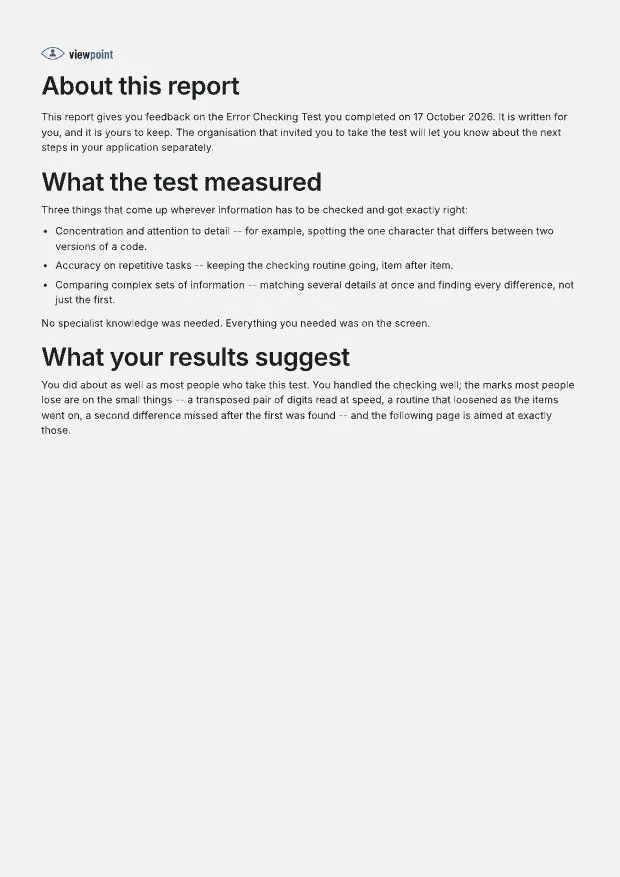
Candidates check consignment details against a pick manifest, using a key where marked, and select every error they find. An Assessor Report shows percentile, score band, speed and accuracy; a Candidate Report gives supportive development advice without scores. Employers use it as an error identification test of attention to detail, and rail operators often use it as a train driver error checking test. Multiple language versions are available.
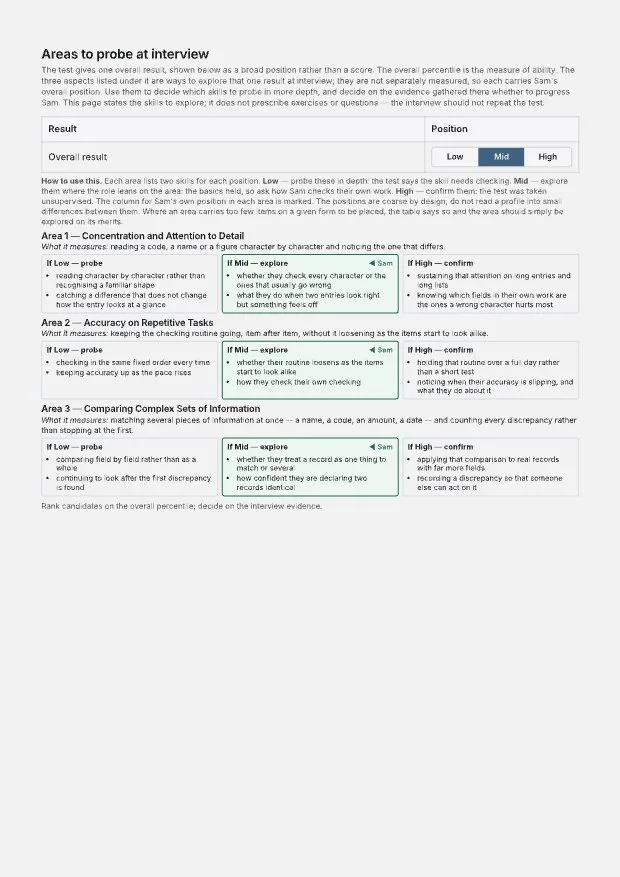
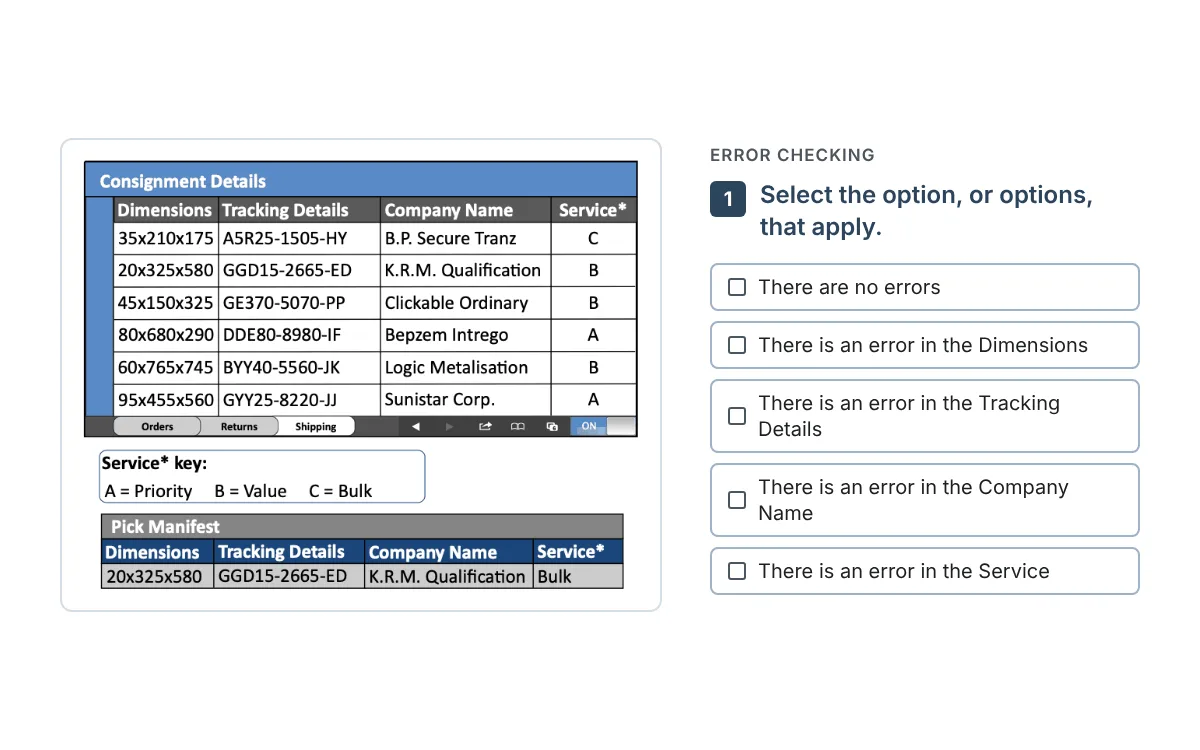
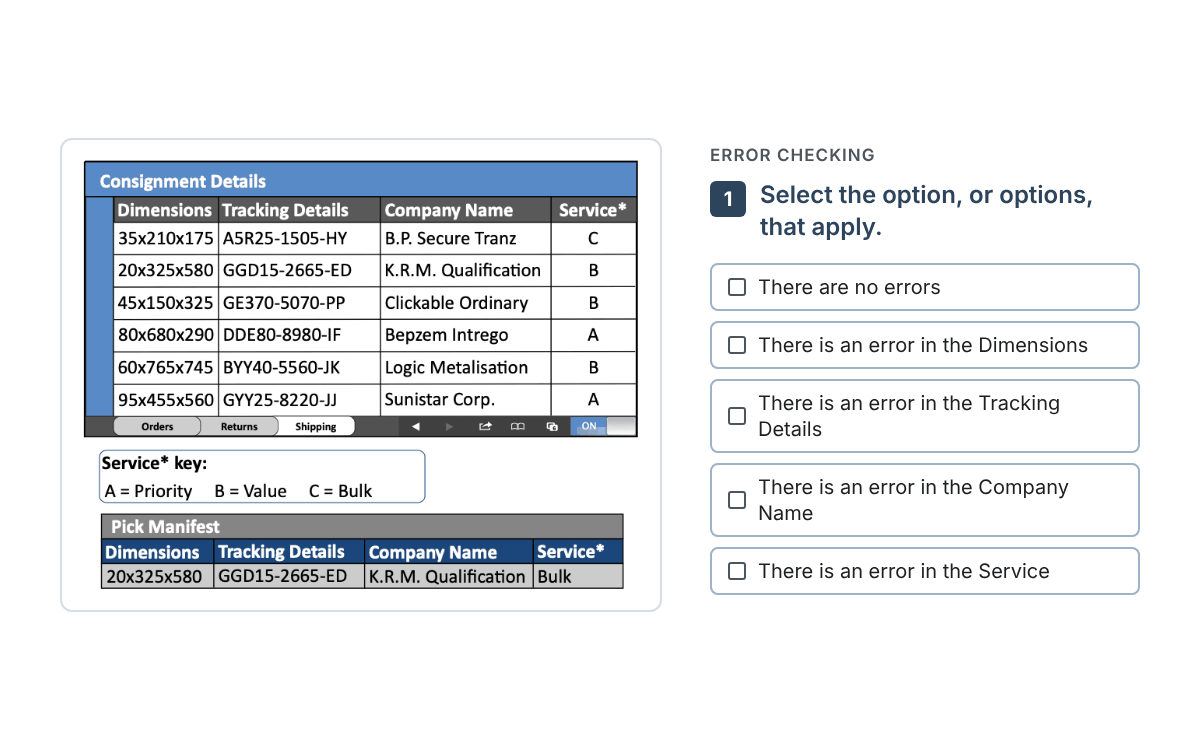
See what candidates see
Check consignment details against a pick manifest for errors. 50 items in 10 minutes.
Try example questions in the same format candidates see. It is free and takes a few minutes.
What the Error Checking Test measures
The Error Checking Test measures attention to detail and the ability to spot errors between two sets of data containing a lot of numerical and verbal information. It needs sustained concentration.
Attention to detail
Spotting small differences in numbers, codes and names.
Applying a key
Checking coded information against the key provided.
Sustained concentration
Staying accurate across repetitive checks.
Why organisations choose Viewpoint ability tests
Fair and objective
Every candidate takes the same test, scored the same way, so decisions rest on evidence rather than impressions.
Candidates know what to expect
Clear instructions and example questions come before the test starts, so nobody is caught out by the format.
Reports you can act on
Clear results and score bands from Very Low to Very High, ready for shortlisting or a feedback conversation.
Fits your process
Use it to screen applicants early, to shortlist, or to add objective evidence at the final stage.
Reports that do the work for you
Two reports are available: an Assessor Report showing the candidate's percentile and score band (Very Low to Very High) against the norm group, with speed and accuracy, and a Candidate Report with no scores, giving supportive development advice.
View sample
Assessor Report
For recruiters and hiring managers
- Score band from Very Low to Very High
- Speed and accuracy
- Interview questions to explore the result
View sample
Candidate Report
For the person who took it
- Constructive feedback in plain English
- No scores shown
- Practical suggestions for development
Who it’s for
The test is particularly useful in jobs that need accuracy, involve repetition or need concentration to be sustained. Typical roles.
Operational roles
Assess the sustained concentration call centre staff, baggage handlers and train drivers need.
Administrative roles
Find executive assistants and ledger clerks who spot errors in numerical and verbal data.
Customer-facing roles
Check that sales and support staff stay accurate when work is detailed and repetitive.
How it works
- 1
Invite
Send candidates their link from the Viewpoint platform. They can take the test wherever suits them.
- 2
Practise, then take the test
Candidates read the instructions and try example questions before the test starts.
- 3
Get the results
Results are ready as soon as the candidate finishes. Download the report and use it straight away.
At a glance
- 50 items, completed in 10 minutes
- 10 question sets of 5 questions
- Candidates check a pick manifest against consignment details, using a key where marked
- An item can have more than one error, or none; candidates select all that apply
Related tests
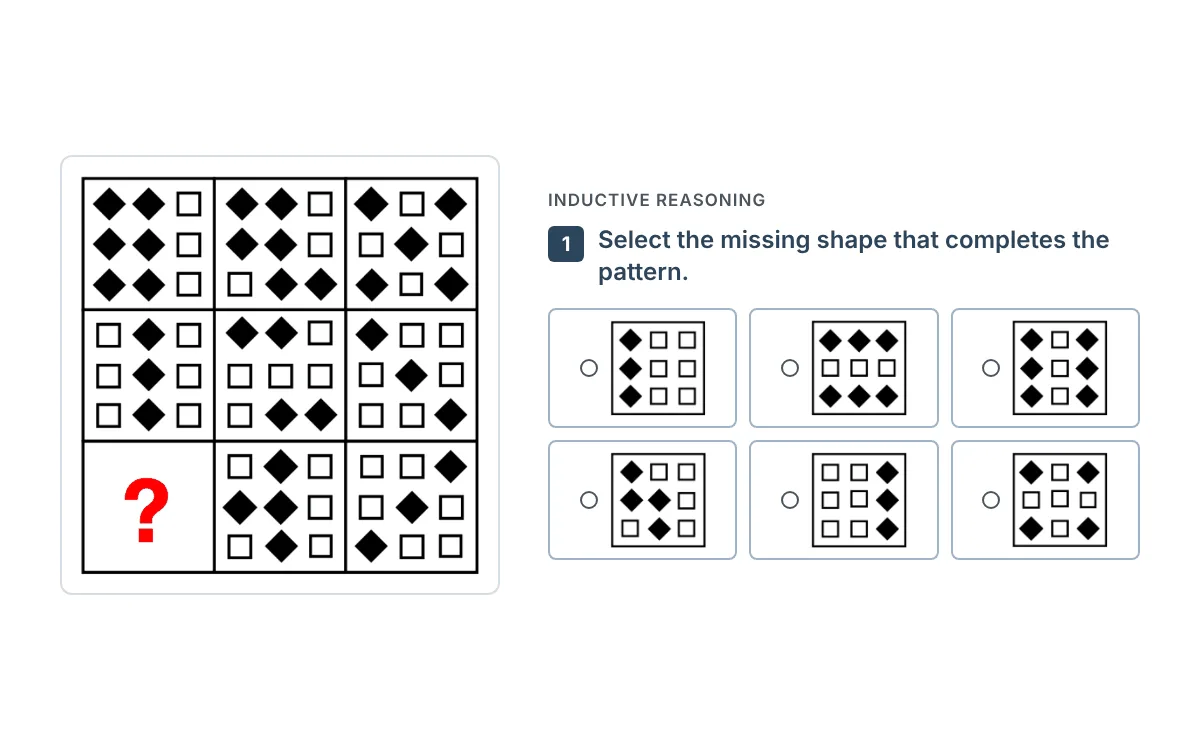 Inductive Reasoning TestFind the missing image in a 9-box pattern of shapes. 36 questions in 30 minutes.
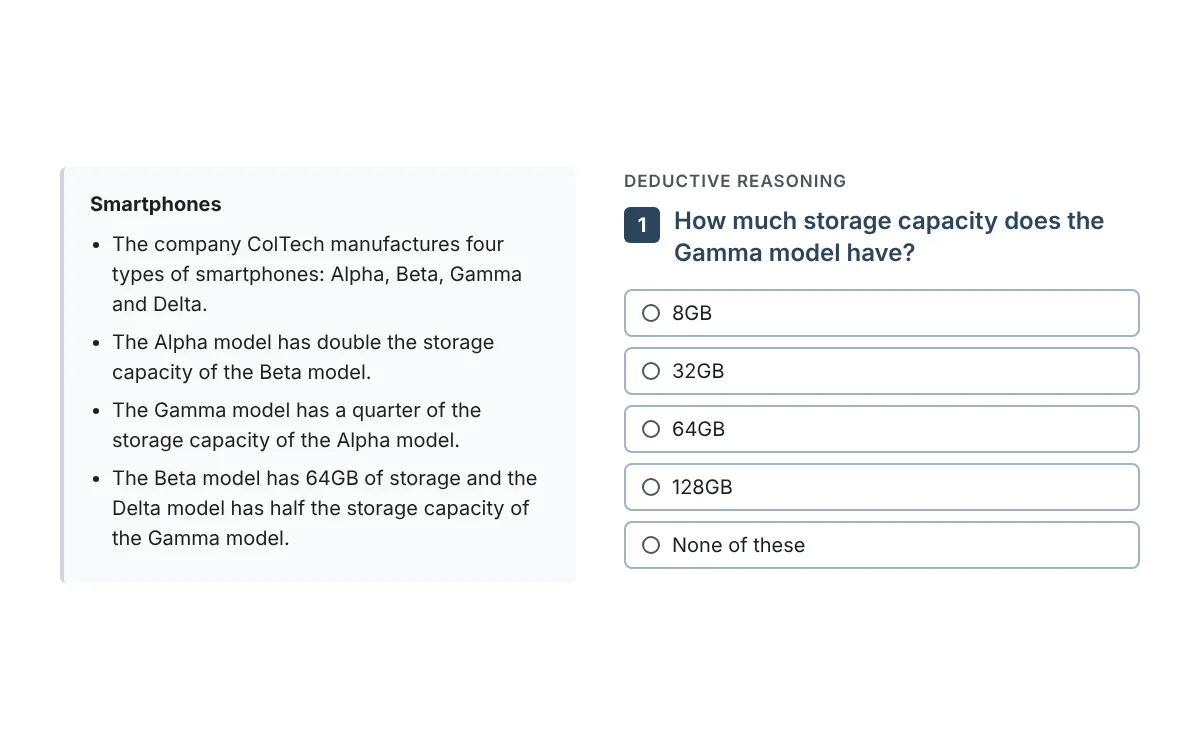 Deductive Reasoning TestDraw logical conclusions from a set of statements or facts.
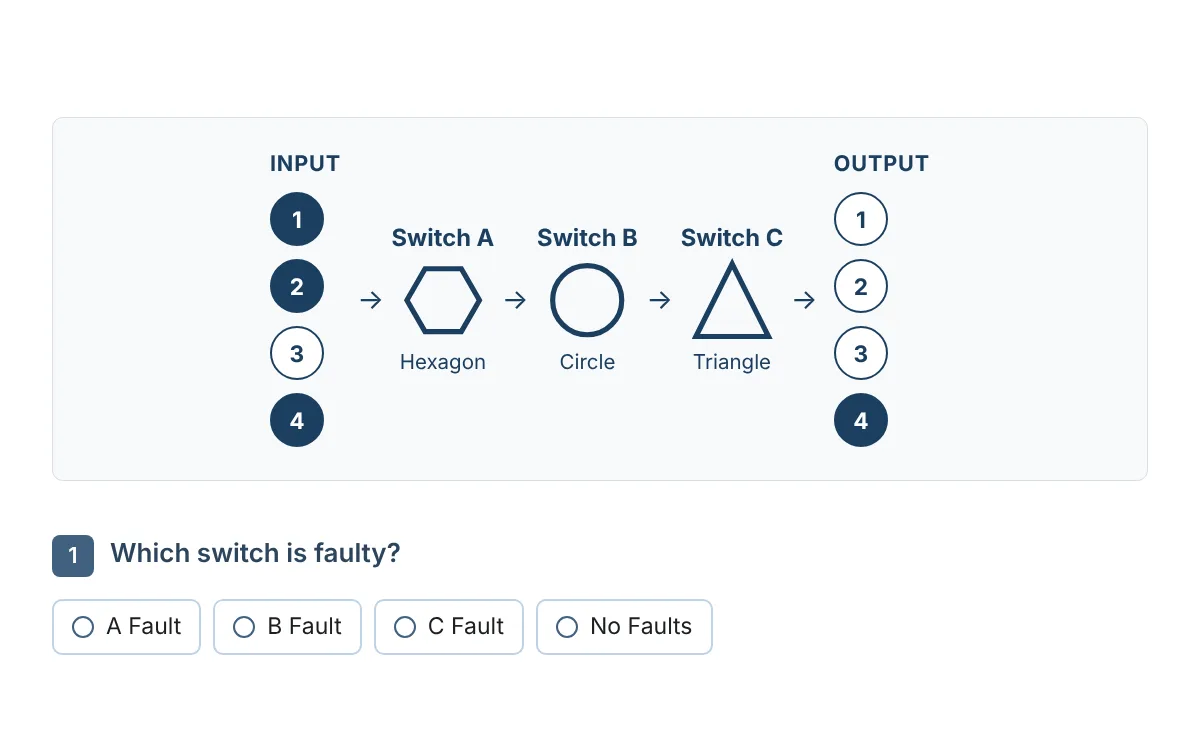 Fault Finding TestWork out which switch in a sequence is faulty from its input and output. 25 questions in 20 minutes.
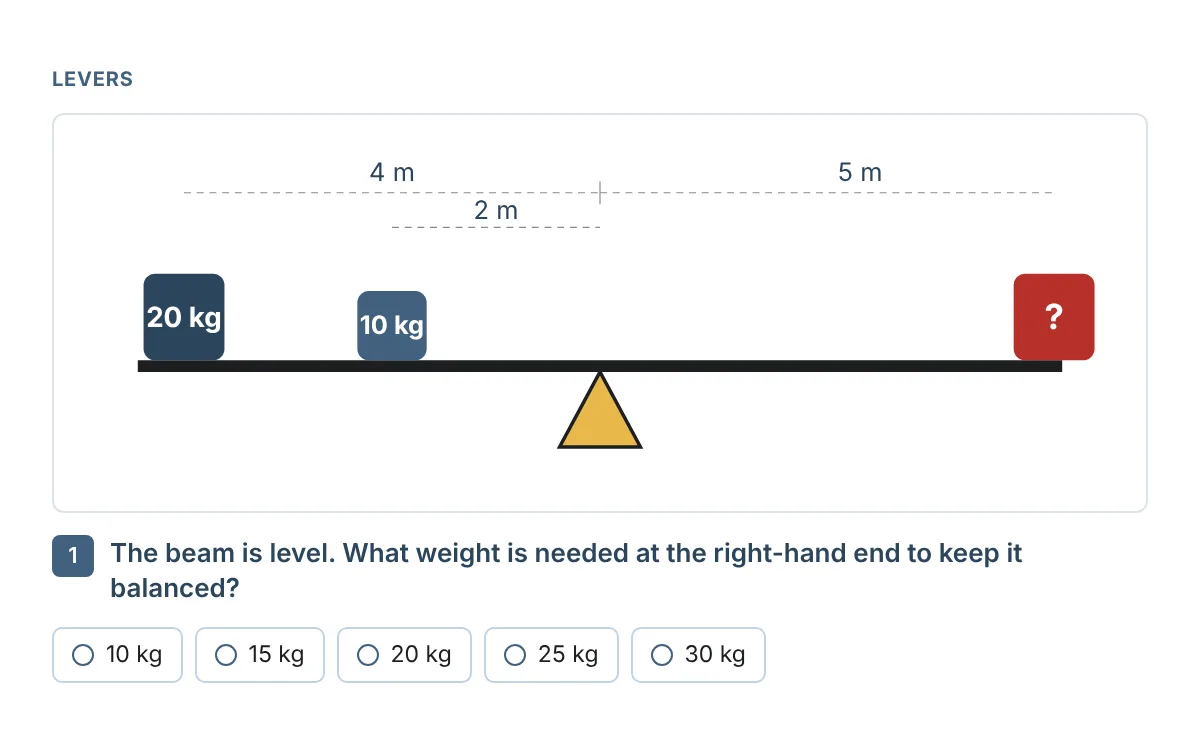 Mechanical Comprehension TestApply mechanical principles to diagrams of everyday mechanisms. 32 items in 20 minutes.
How candidates can do their best
Find the row first
Work out which row of the consignment details the pick manifest was copied from.
Find all the errors
There may be more than one, so check the whole line before moving on.
Remember the key
Where there is an asterisk, use the key to interpret the cell.
See the Error Checking Test for yourself
Try it and see the reports your team would receive. Contact us for a free trial or a demonstration of the platform.
Frequently asked questions
What does the Error Checking Test measure?
The Error Checking Test measures attention to detail and the ability to spot errors between two sets of data containing a lot of numerical and verbal information. It needs sustained concentration.
How long does the Error Checking Test take, and what is the format?
50 items, completed in 10 minutes. 10 question sets of 5 questions. Candidates check a pick manifest against consignment details, using a key where marked. An item can have more than one error, or none; candidates select all that apply.
Which roles is the Error Checking Test used for?
The test is particularly useful in jobs that need accuracy, involve repetition or need concentration to be sustained. Typical uses: operational roles, administrative roles, customer-facing roles.
What reports do you get with the Error Checking Test?
Two reports are available: an Assessor Report showing the candidate's percentile and score band (Very Low to Very High) against the norm group, with speed and accuracy, and a Candidate Report with no scores, giving supportive development advice.
Is there a pass mark?
No. The Assessor Report shows the candidate's result in a score band from Very Low to Very High. You decide how to use it alongside your other evidence.
Do candidates see their score?
No. The Candidate Report gives supportive, constructive feedback and development advice, and shows no scores.
Can we try the Error Checking Test before using it?
Yes. Contact us for a free trial or a demonstration of the platform. Candidates always see clear instructions and examples before the test starts.
More Free Tests
Try additional psychometric tests for free:
Take a Free SJT Take a Free Personality Test Take a Free Critical Reasoning Test Take a Free Barista SJT