
Situational Judgement Tests for Recruitment and Development
Our situational judgement tests (SJTs) put candidates in realistic situations from the job and ask which responses are most and least appropriate. They show how people are likely to handle the work, from apprentices and customer service staff to managers, nurses and train drivers.
How organisations use our SJTs
In recruitment
SJTs give a fair, consistent view of how candidates approach the job, and a realistic preview of the role for the candidate.
- Sift high-volume applications fairly
- Compare candidates on the situations that matter in the role
- Video scenarios that candidates engage with and complete
In development
The Candidate Report shows no scores. It gives constructive suggestions so people can strengthen how they handle situations at work.
- Support new starters and future leaders
- Give feedback people can act on
- Use the interview questions to explore judgement in more depth
Explore the tests
Choose a test to see an example question, the test format and sample reports.
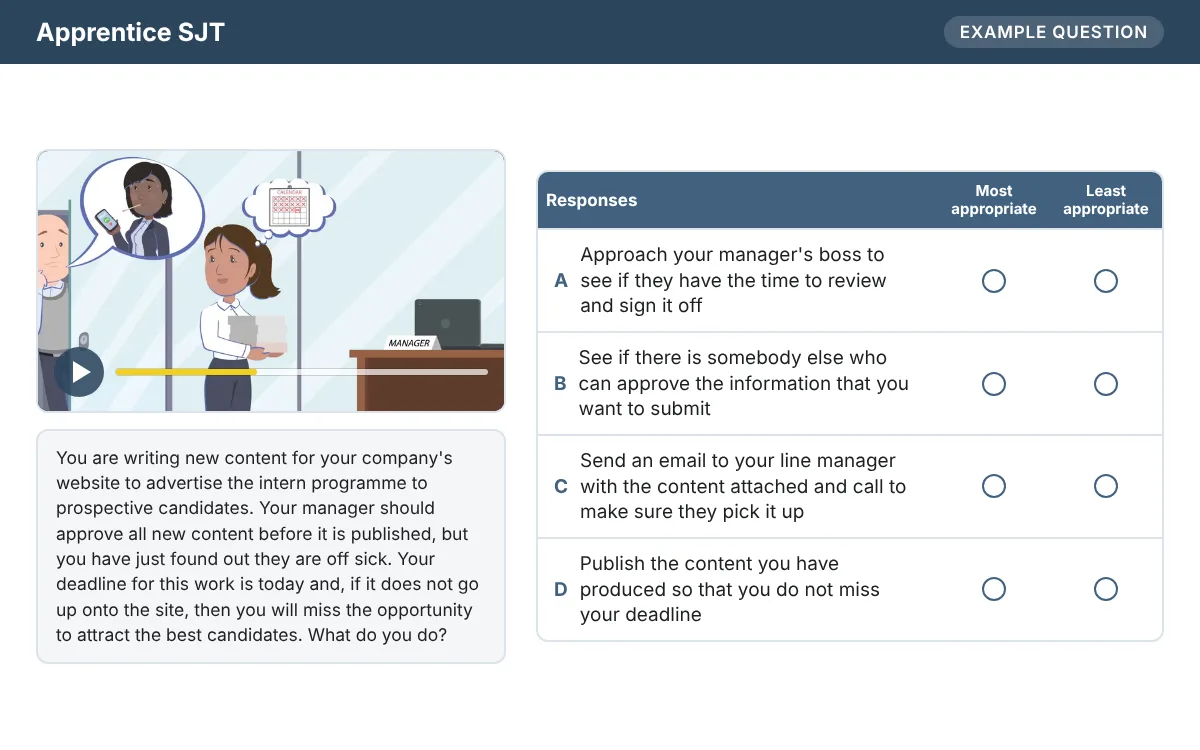
Apprentice SJT
Choose the most and least appropriate responses to 16 apprentice situations. Untimed, up to 15 minutes.
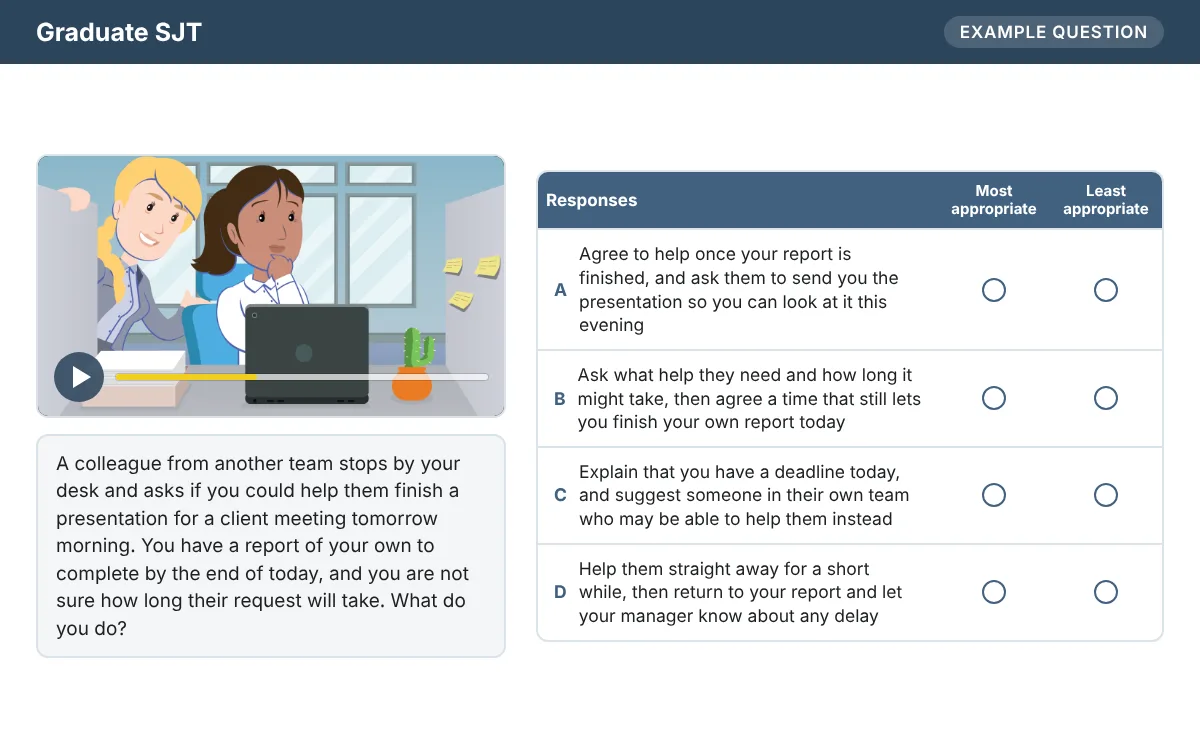
Graduate SJT
Choose the most and least appropriate responses to 16 graduate situations. Untimed, up to 15 minutes.
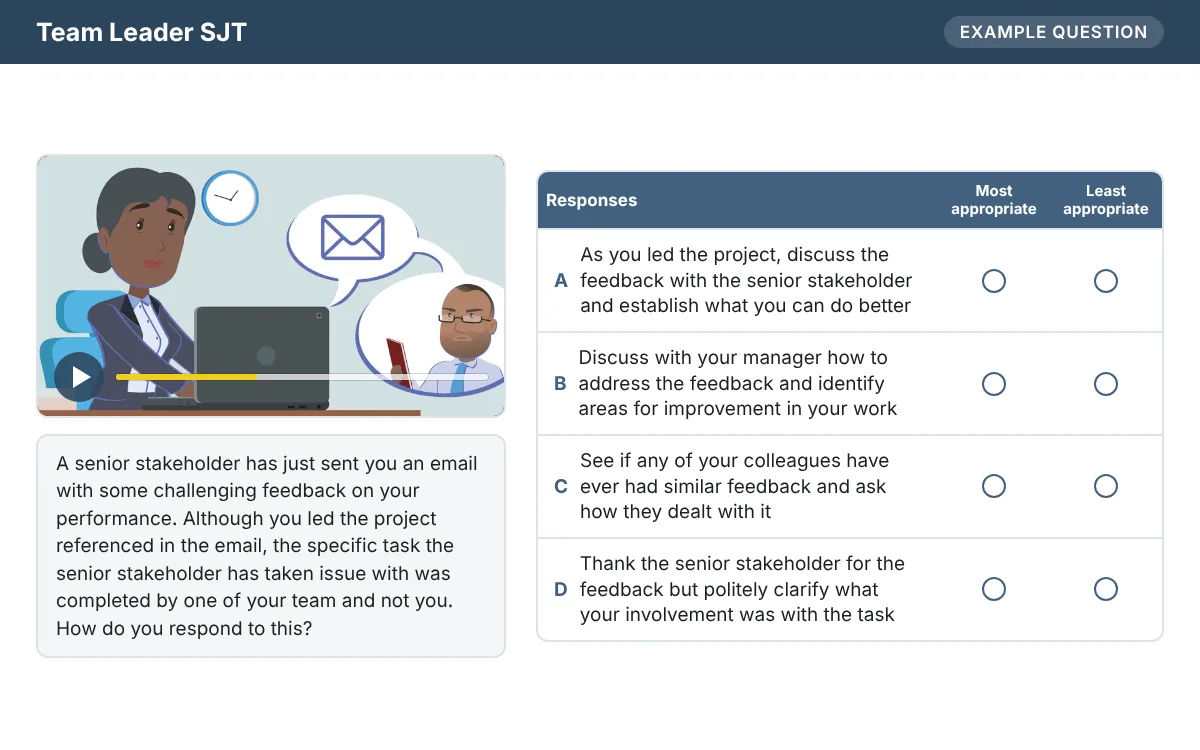
Team Leader SJT
Choose the most and least appropriate responses to 16 team leader situations. Untimed, up to 15 minutes.
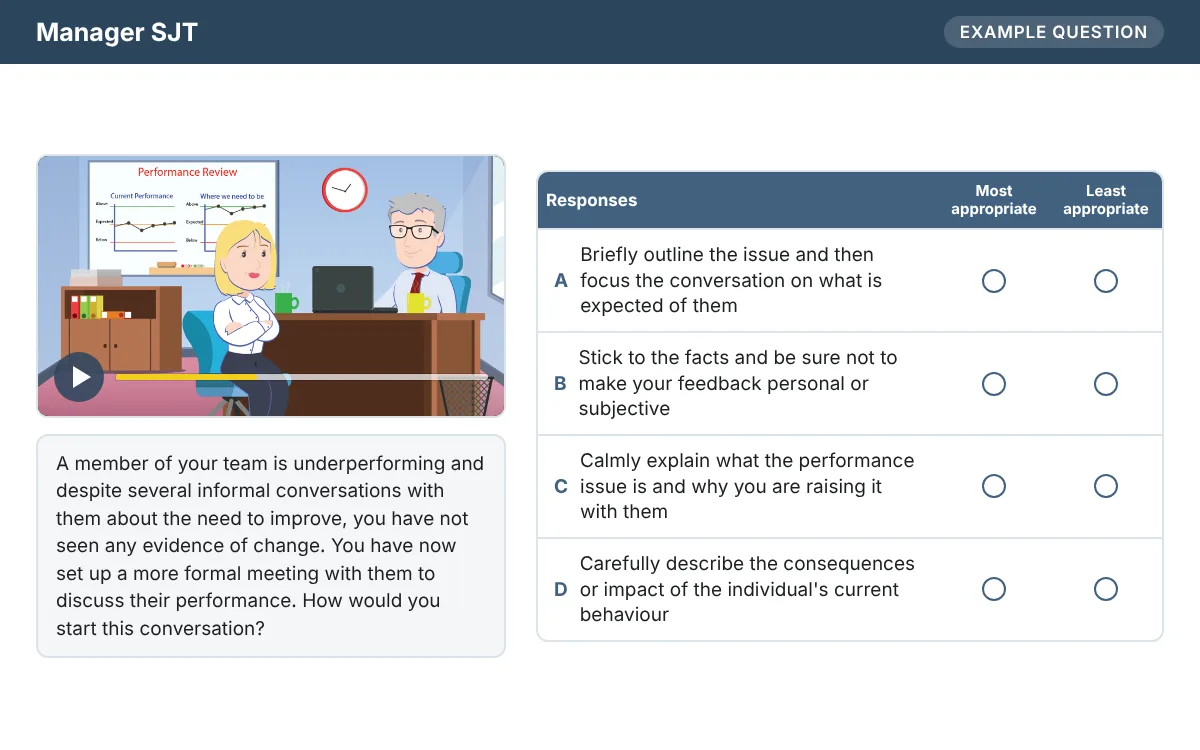
Manager SJT
Choose the most and least appropriate responses to 16 management situations. Untimed, up to 15 minutes.
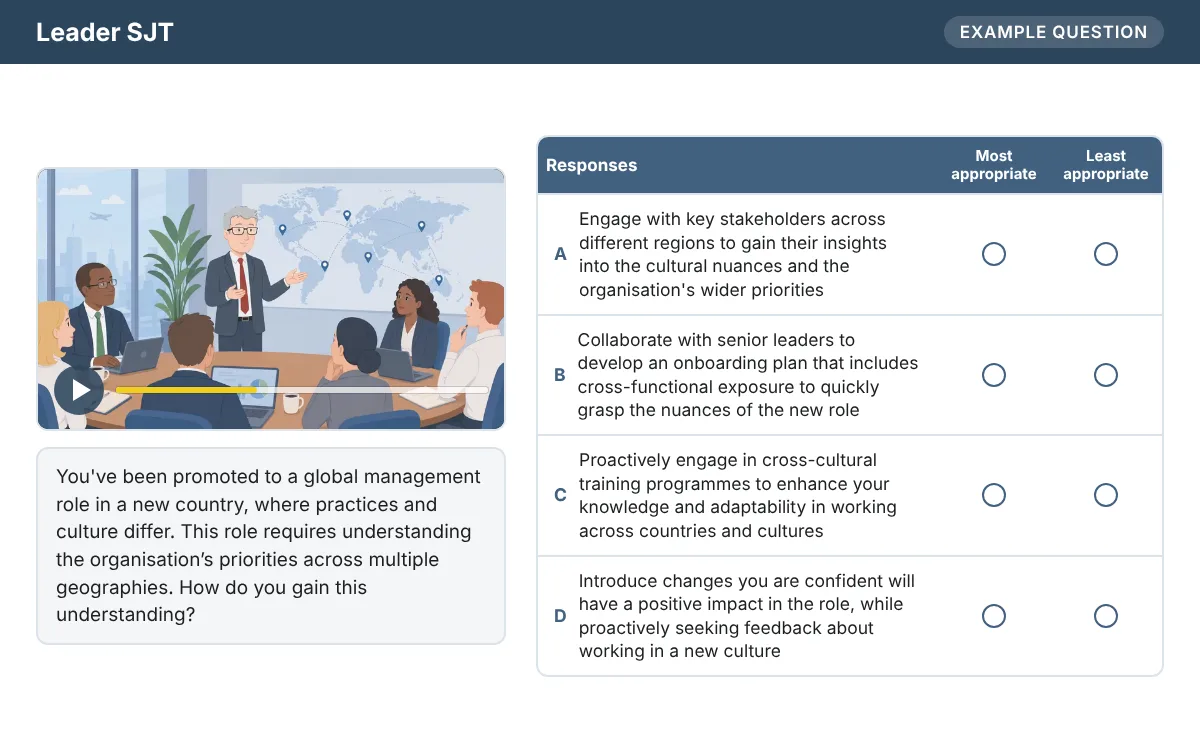
Leader SJT
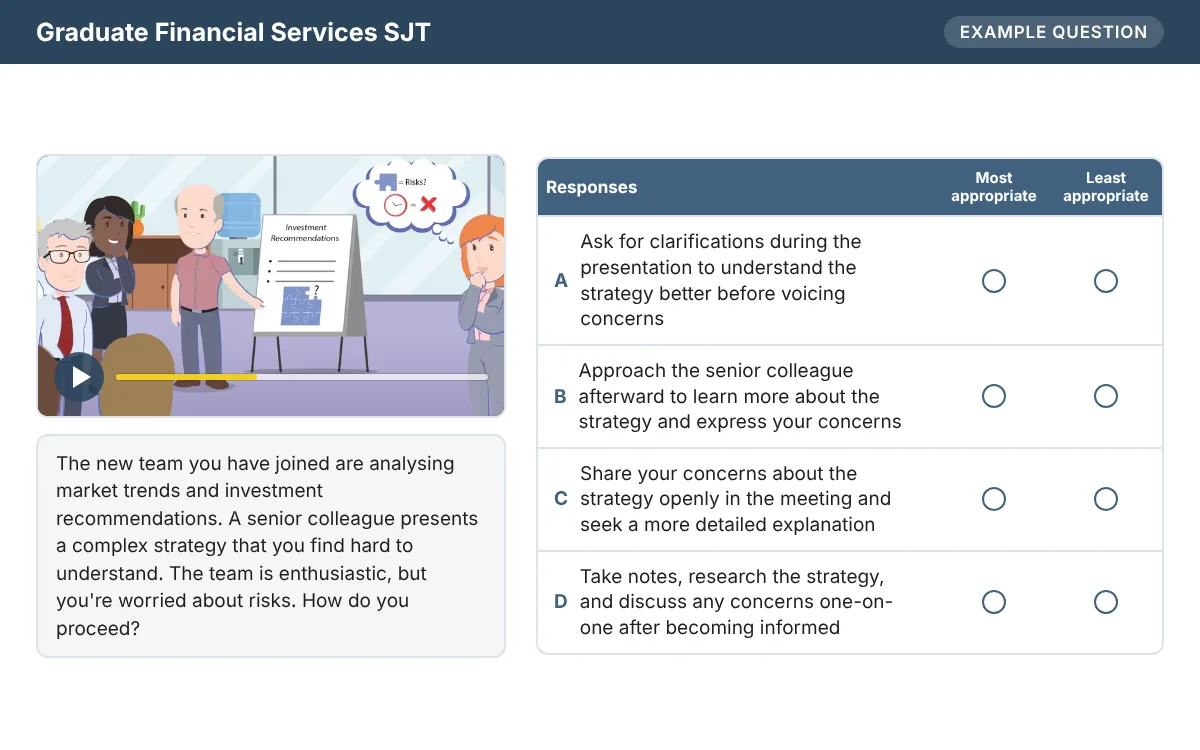
Graduate Financial Services SJT
Choose the most and least appropriate responses to graduate situations in financial services. Untimed, about 10 minutes.
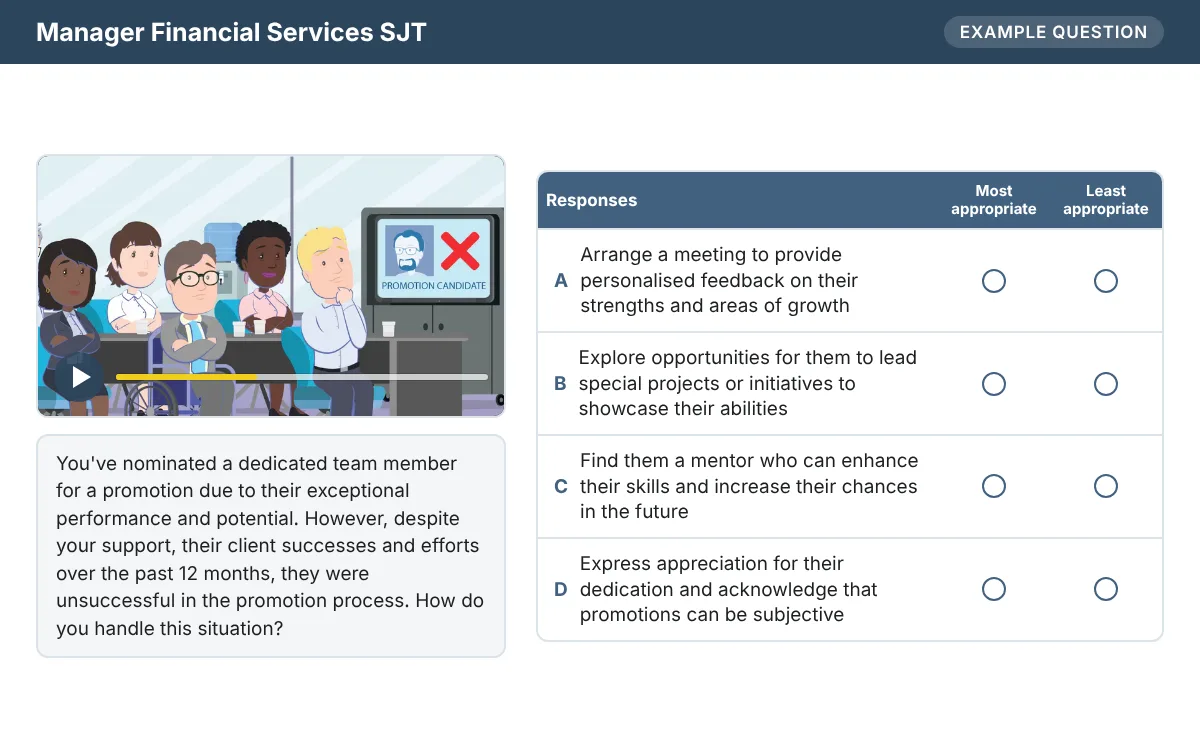
Manager Financial Services SJT
Choose the most and least appropriate responses to management situations in financial services. Untimed, about 10 minutes.
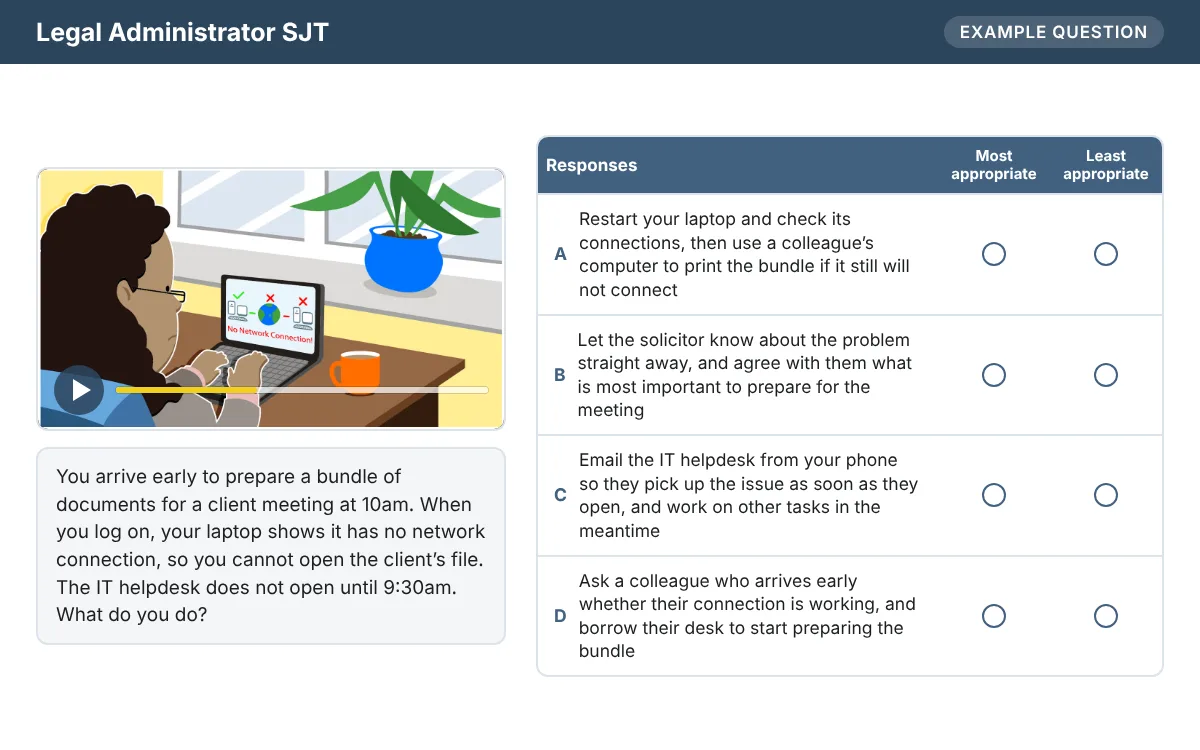
Legal Administrator SJT
Choose the most and least appropriate responses to 16 situations in a law firm administration role. Untimed.
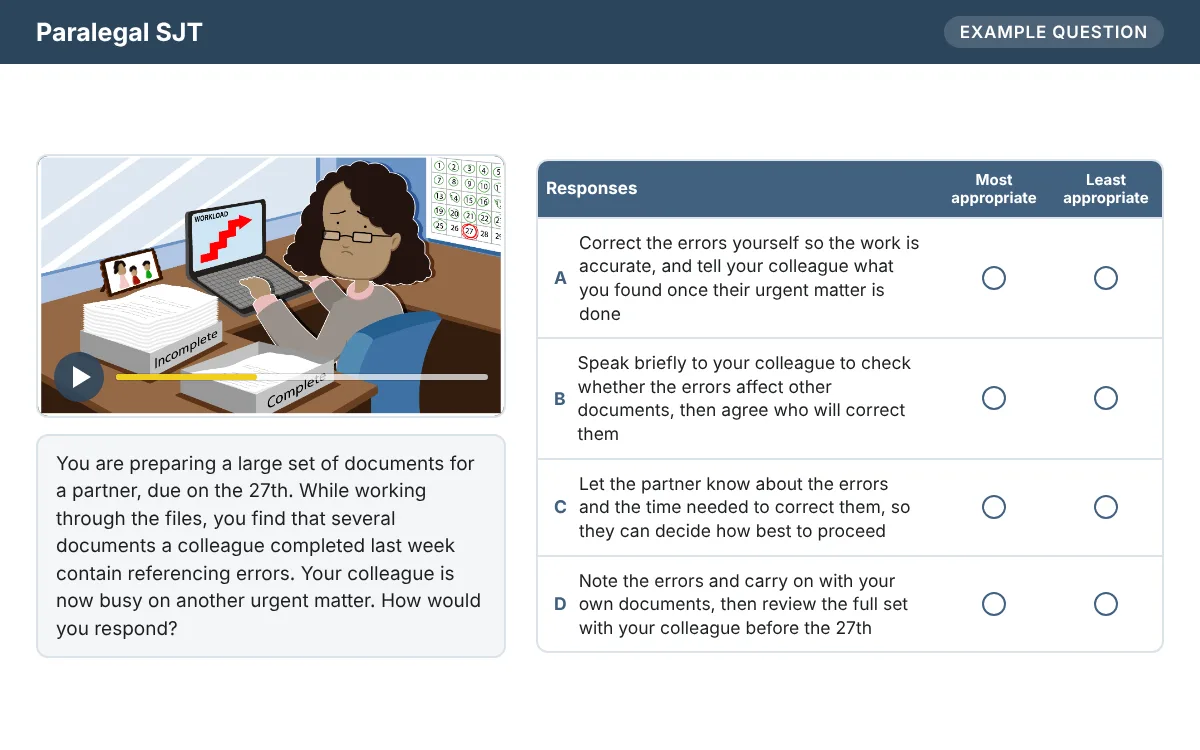
Paralegal SJT
Choose the most and least appropriate responses to 16 paralegal situations. Untimed.
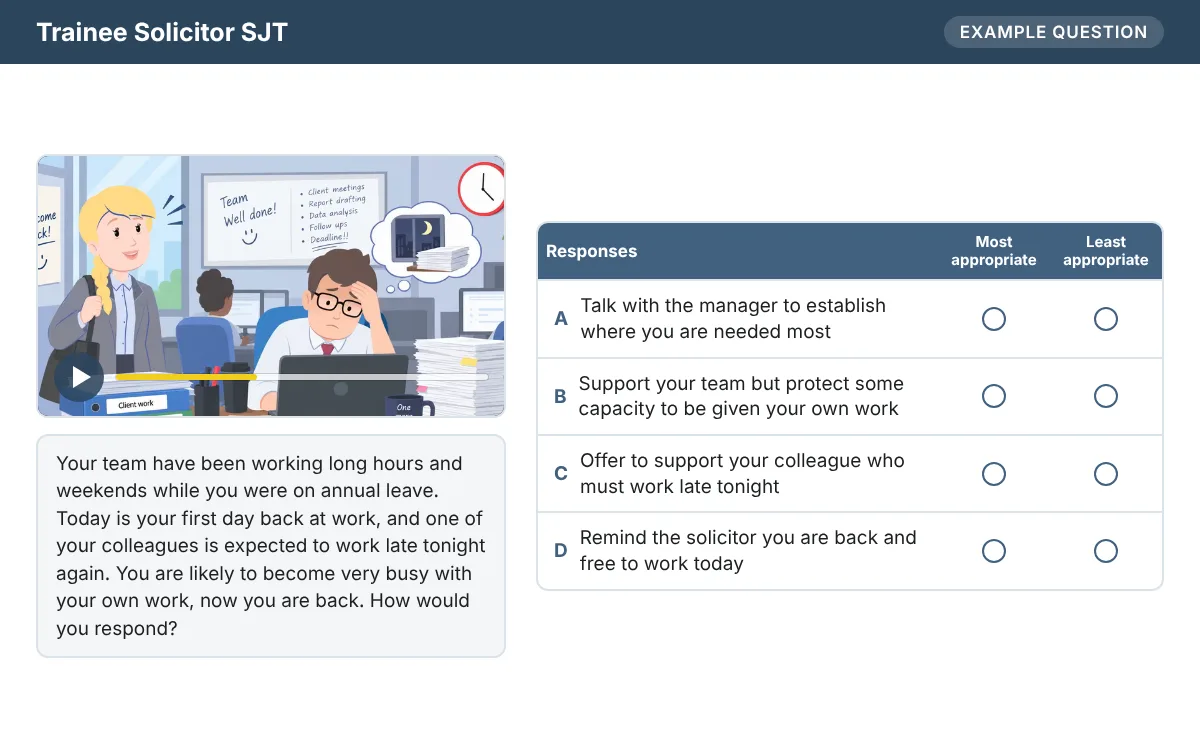
Trainee Solicitor SJT
Choose the most and least appropriate responses to 16 trainee solicitor situations. Untimed.
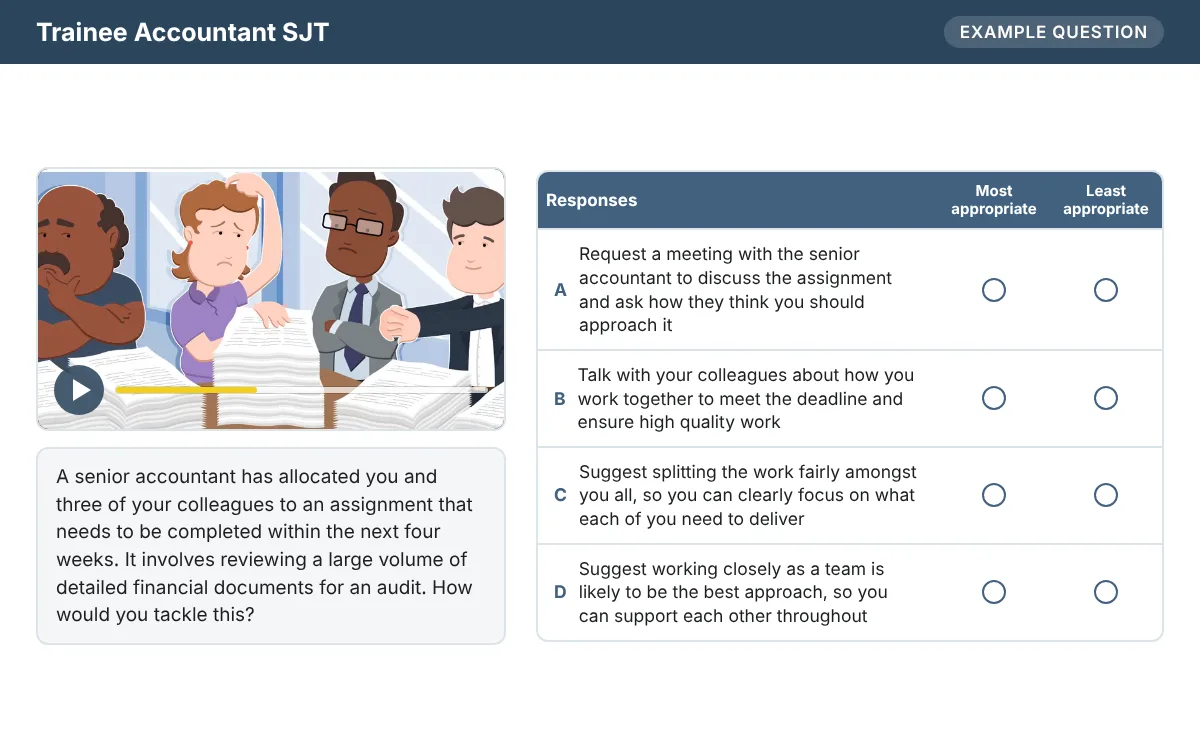
Trainee Accountant SJT
Choose the most and least appropriate responses to 16 trainee accountant situations. Untimed.
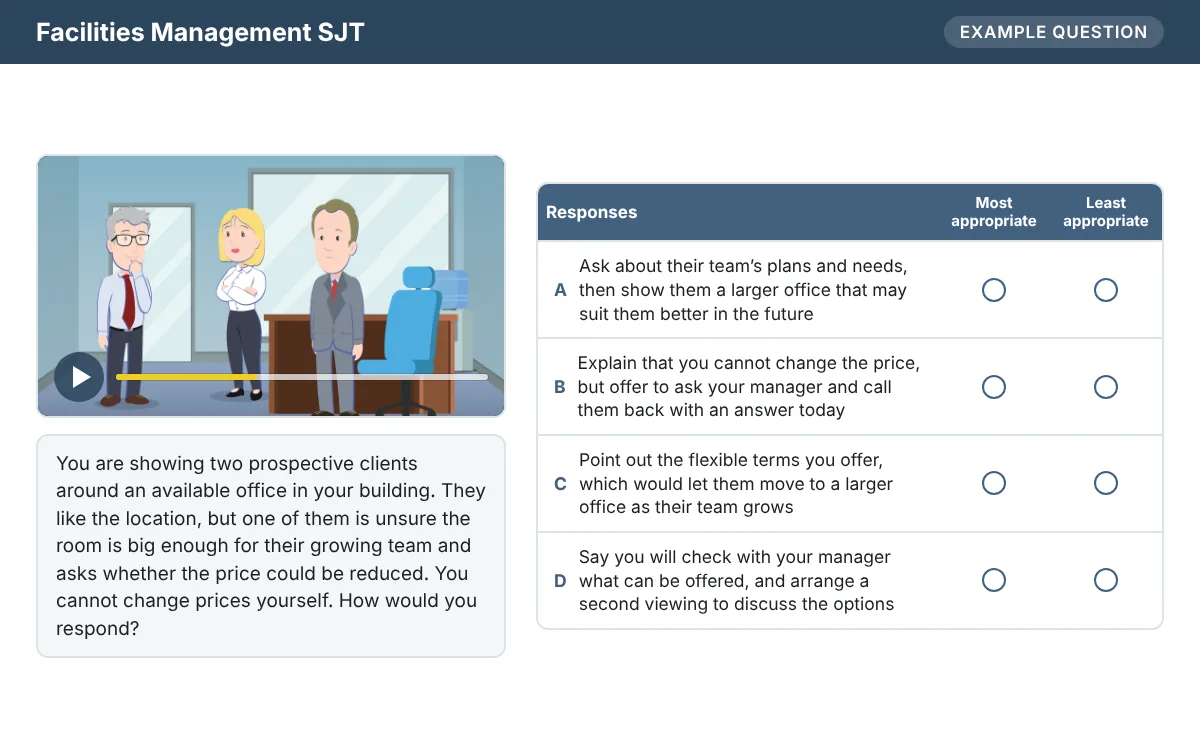
Facilities Management SJT
Choose the most and least appropriate responses to 12 facilities management situations. Untimed.
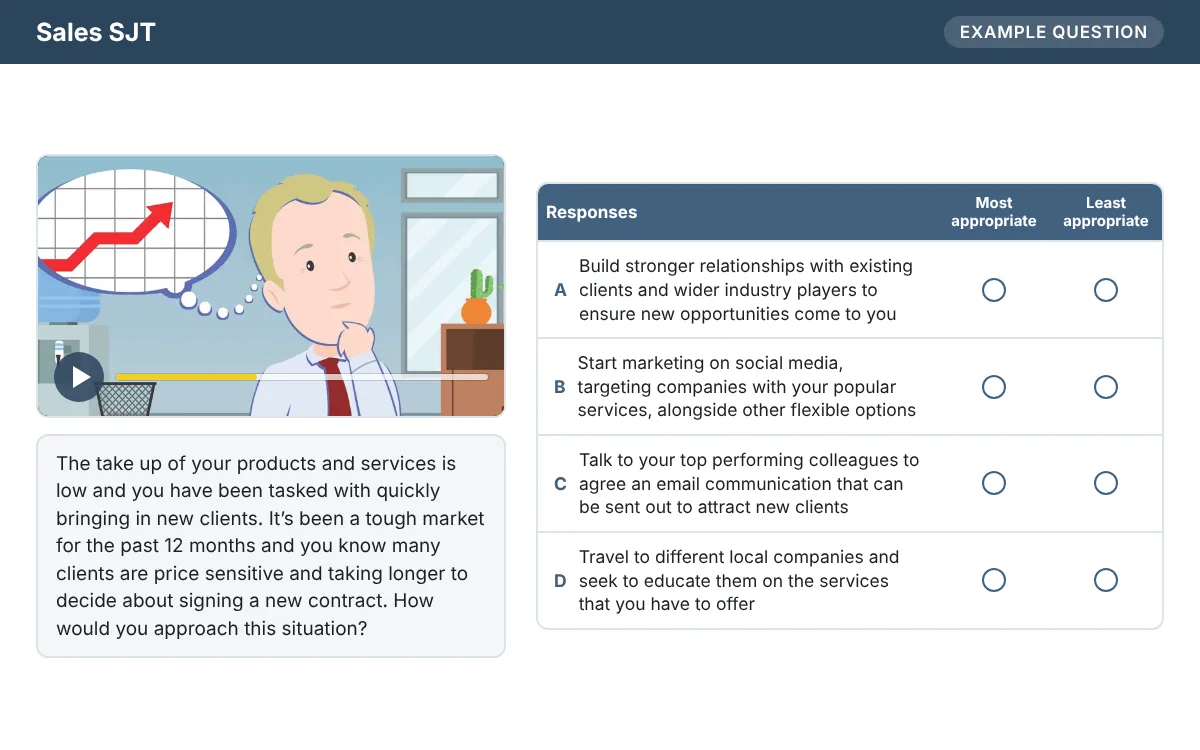
Sales SJT
Choose the most and least appropriate responses to 12 sales situations. Untimed.
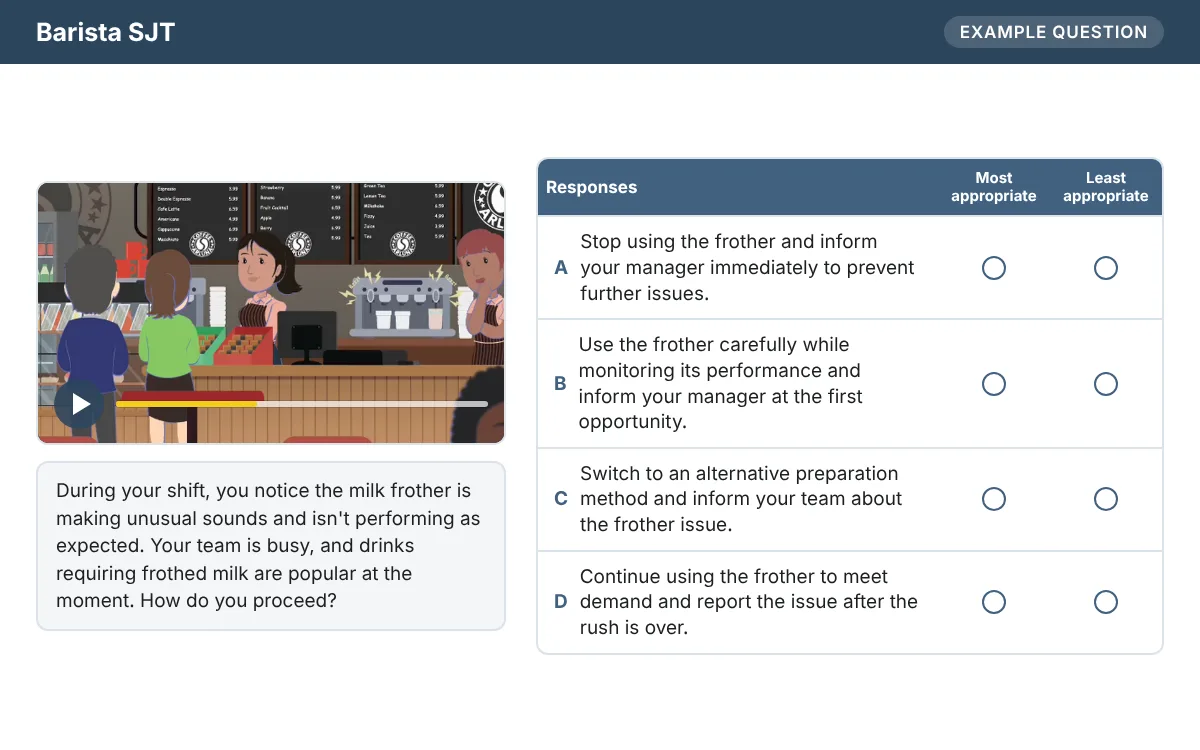
Barista SJT
Choose the most and least appropriate responses to realistic barista situations. Untimed, about 15 minutes.
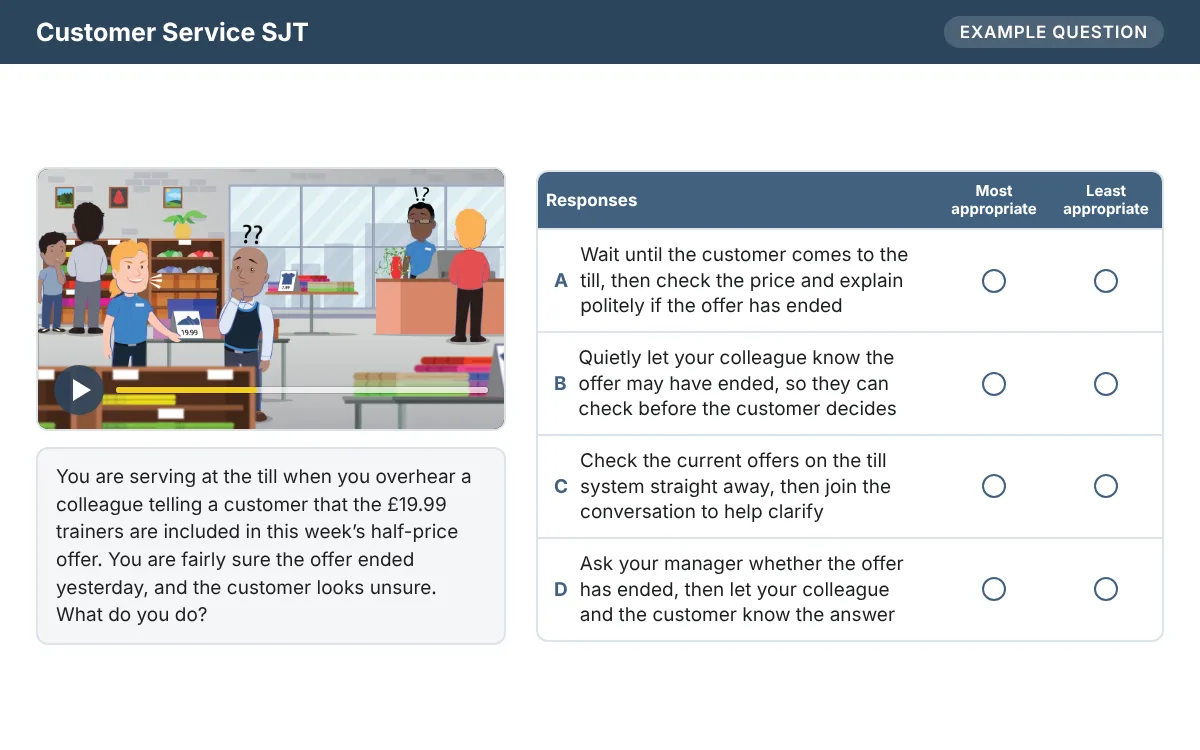
Customer Service SJT
Choose the most and least appropriate responses to 16 retail customer service situations. Untimed.
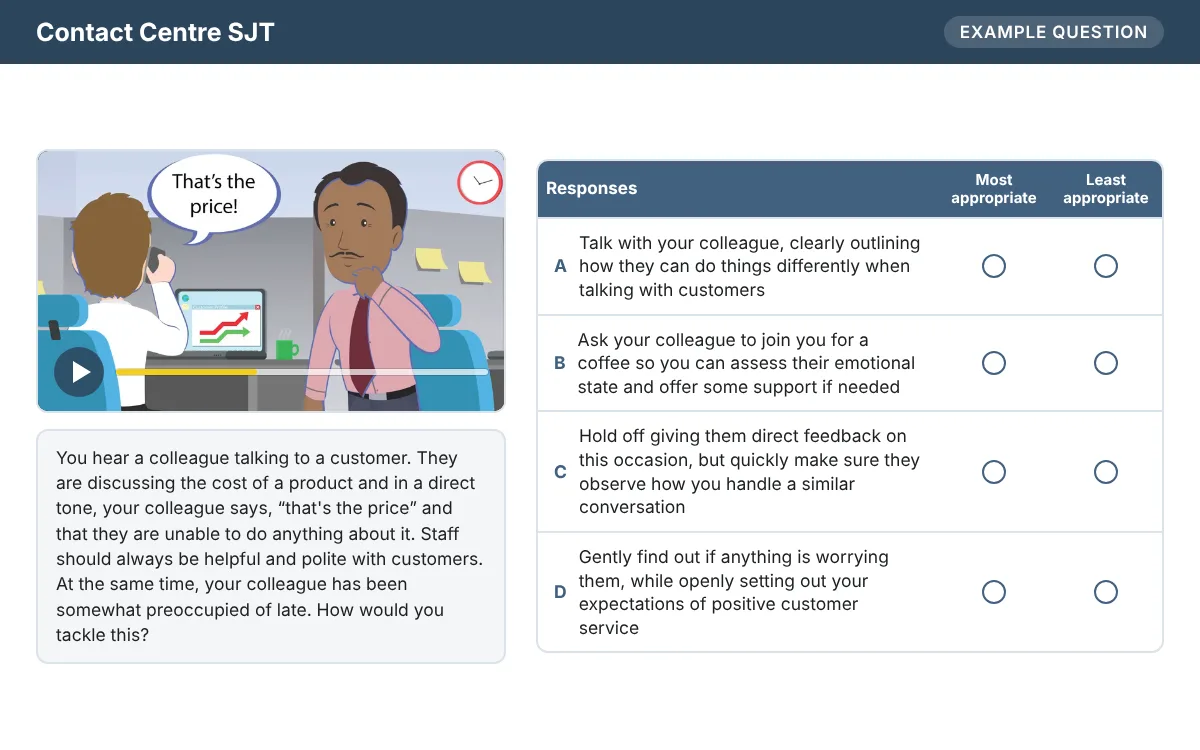
Contact Centre SJT
Choose the most and least appropriate responses to 16 contact centre situations. Untimed.
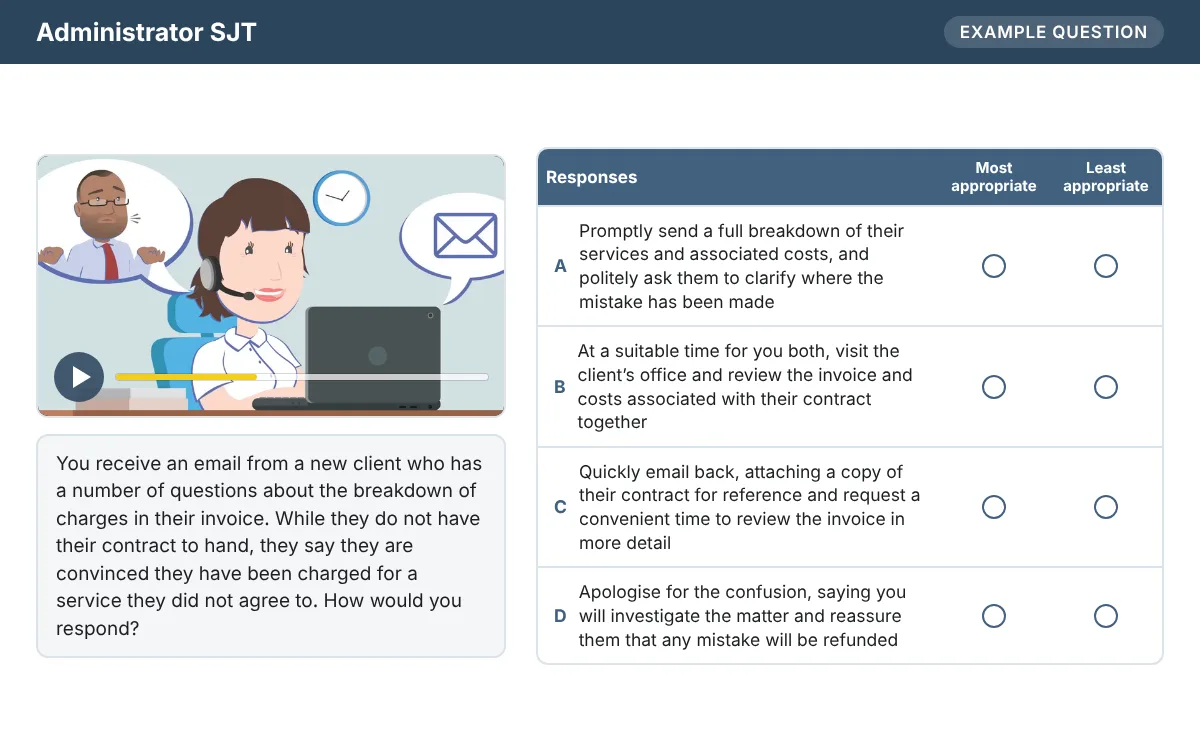
Administrator SJT
Choose the most and least appropriate responses to 12 administrator and PA situations. Untimed.
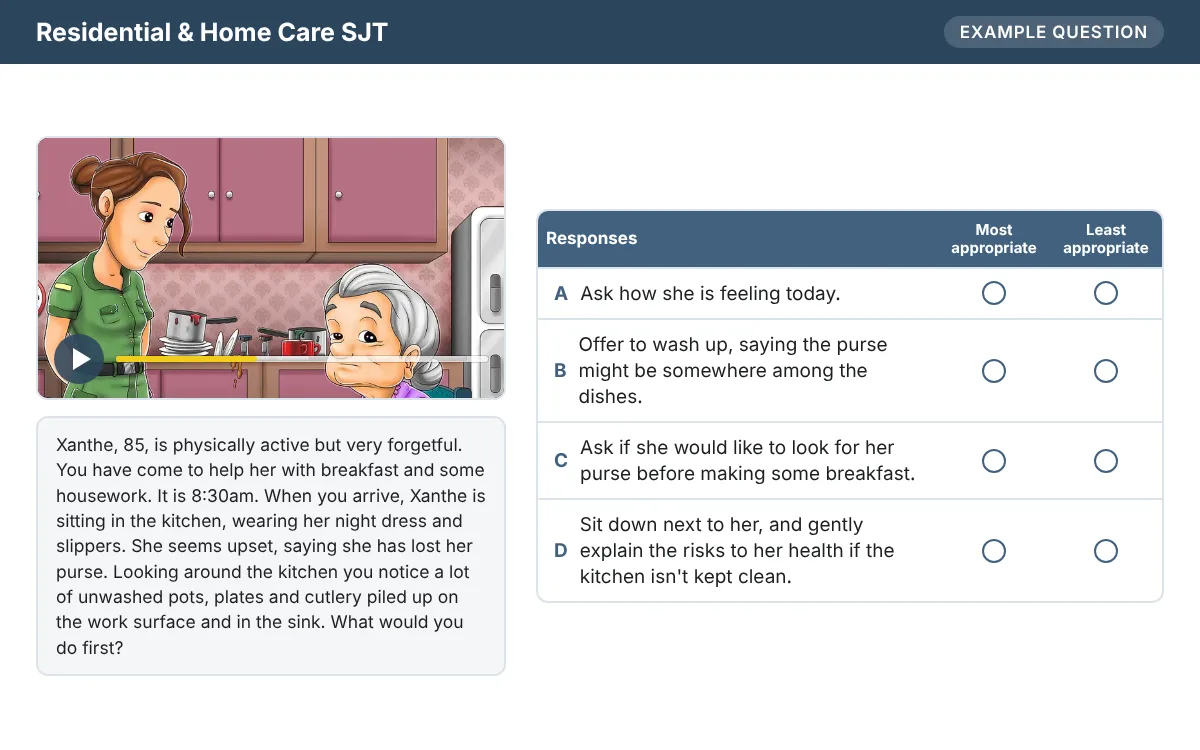
Residential & Home Care SJT
Decide how best to respond across 16 linked steps of visits to 4 care clients. Untimed.
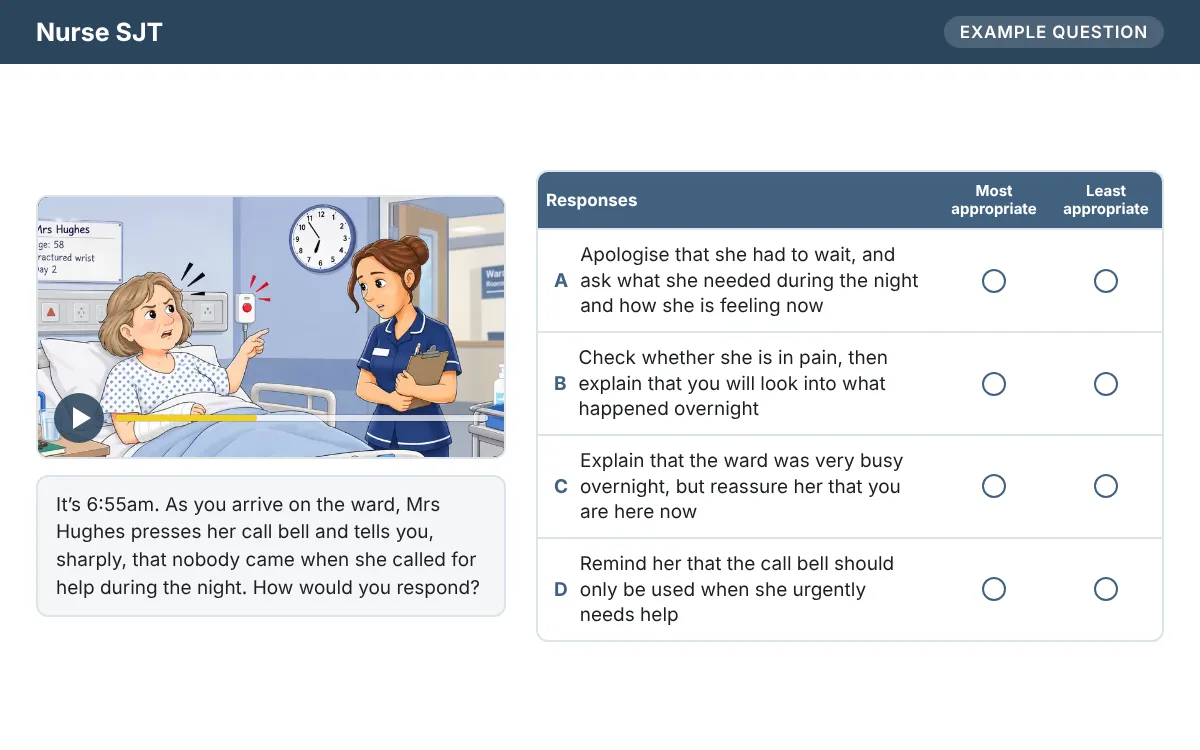
Nurse SJT
Decide how best to respond across 16 linked steps of rounds with 4 patients. Untimed.
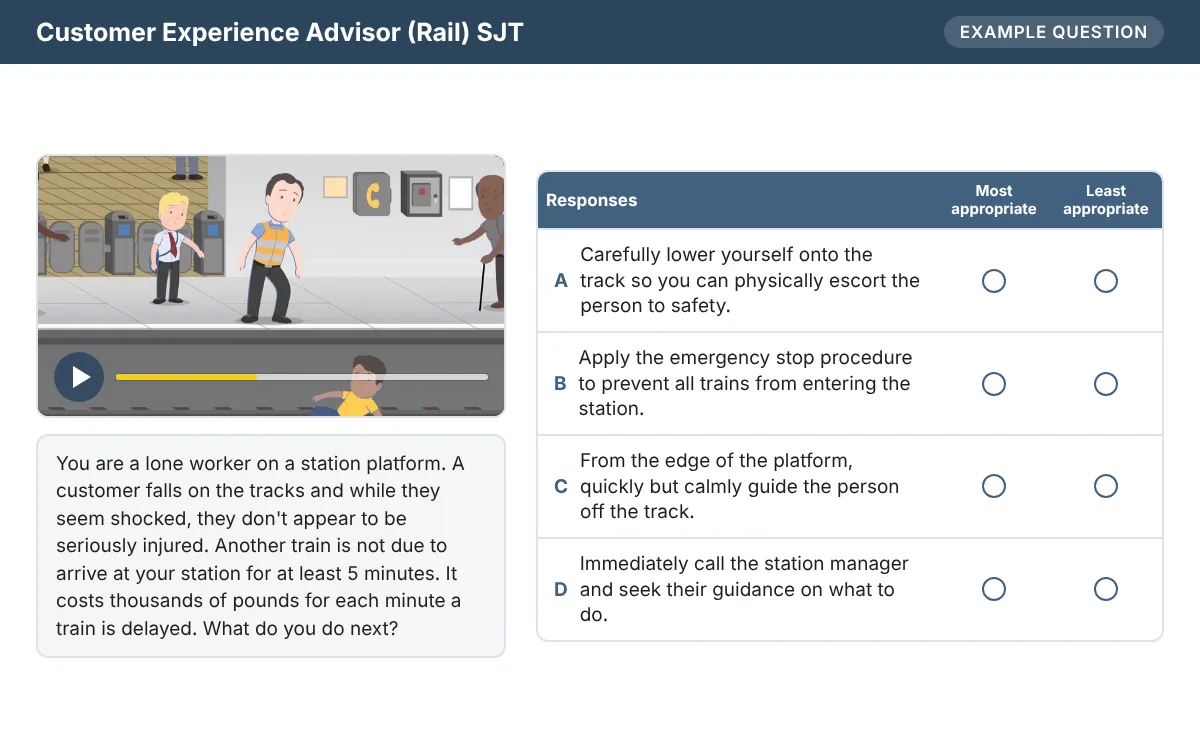
Customer Experience Advisor (Rail Industry) SJT
Choose the most and least appropriate responses to 12 rail customer service situations. Untimed.
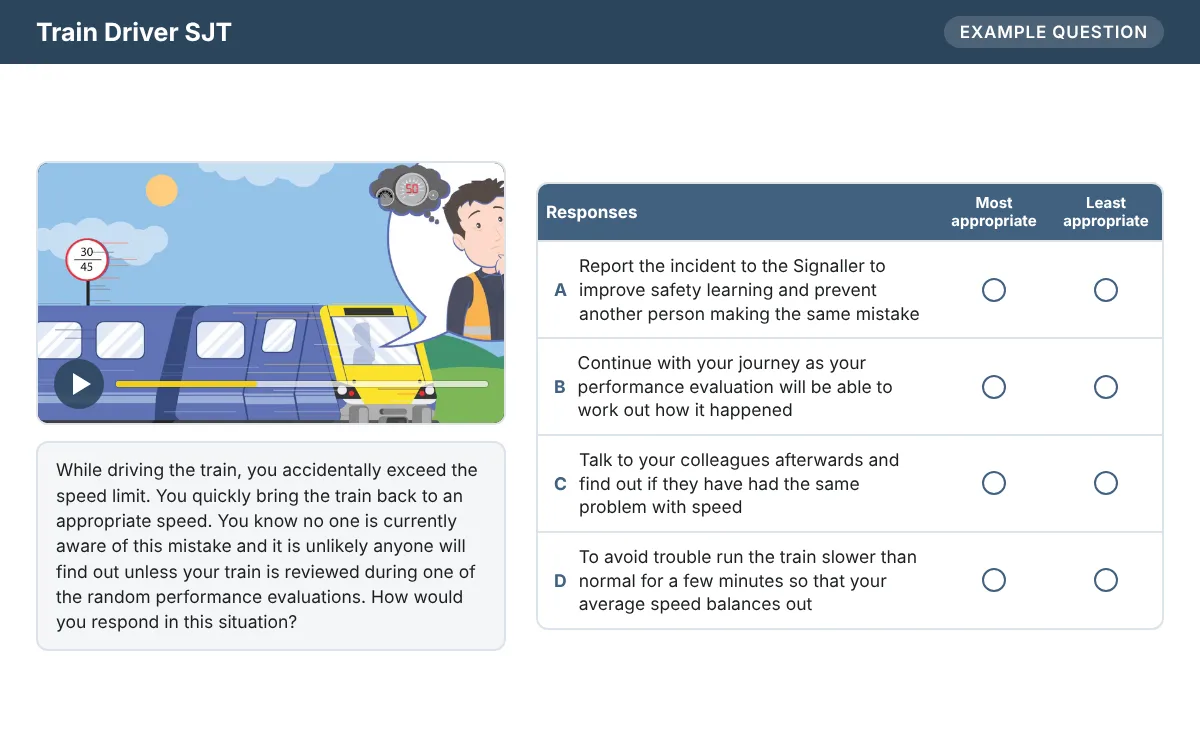
Train Driver SJT
Choose the most and least appropriate responses to 12 train driver situations. Untimed.
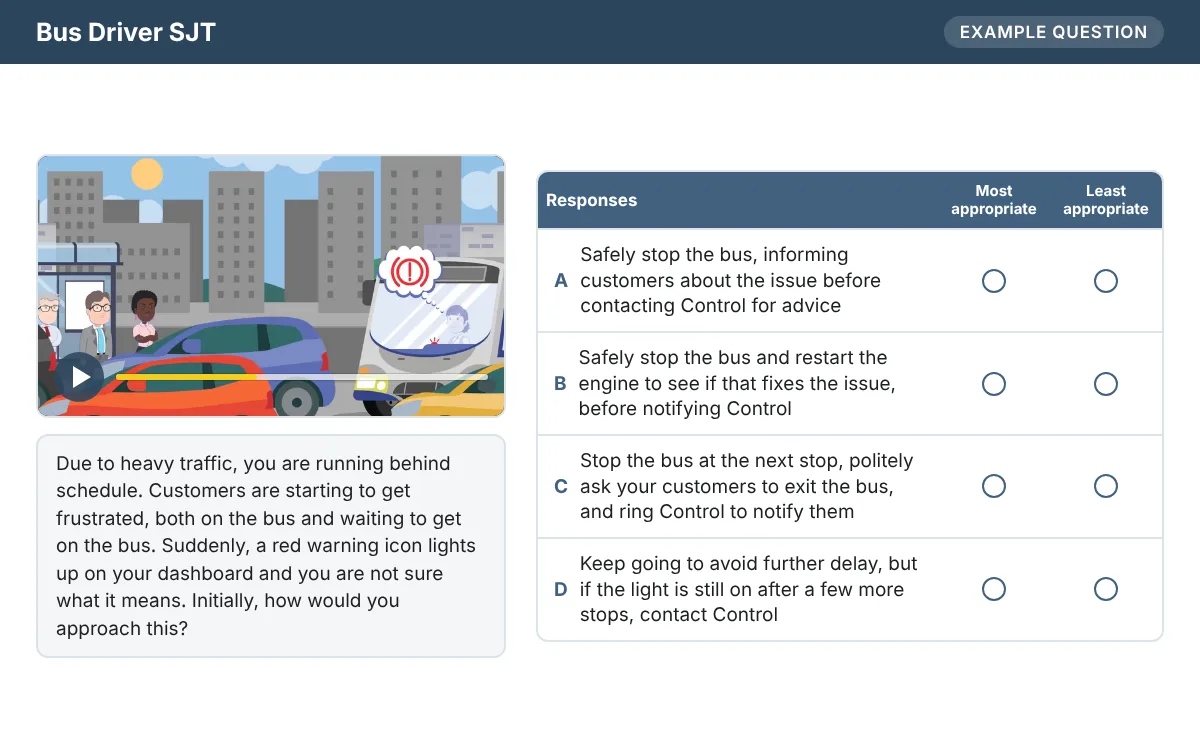
Bus Driver SJT
Choose the most and least appropriate responses to 12 bus driver situations. Untimed.
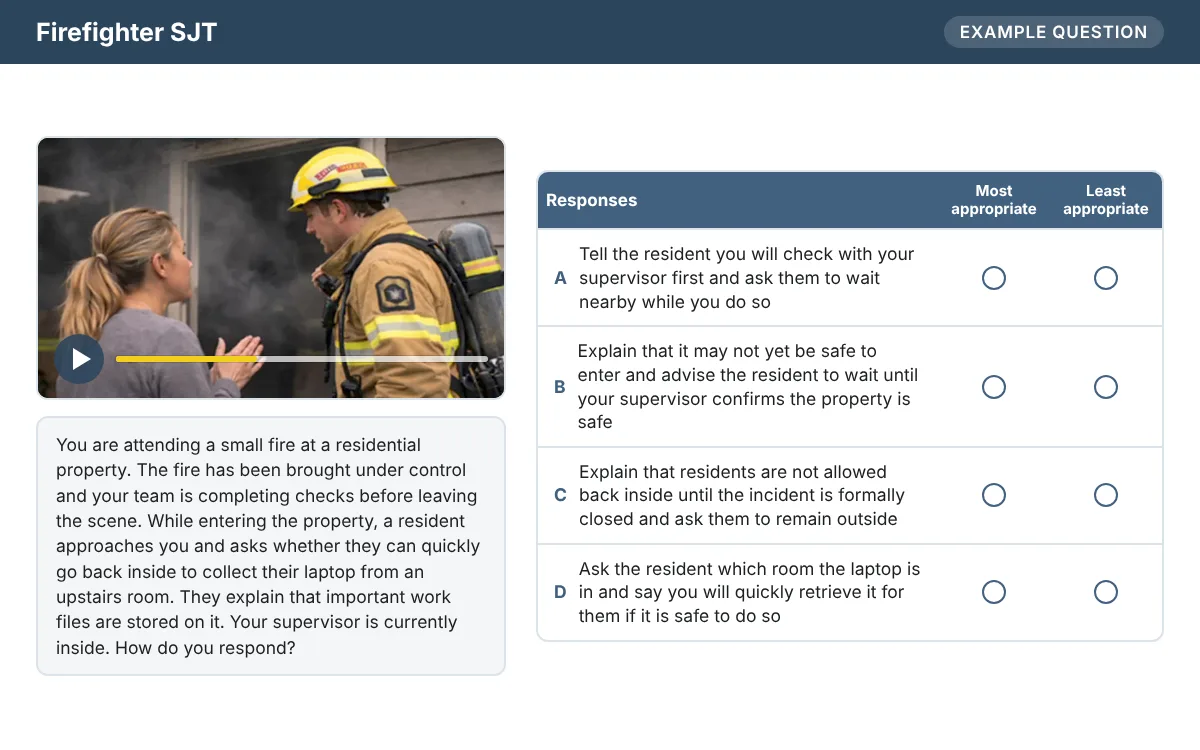
Firefighter SJT
Choose the most and least appropriate responses to 16 firefighter situations. Untimed, up to 15 minutes.
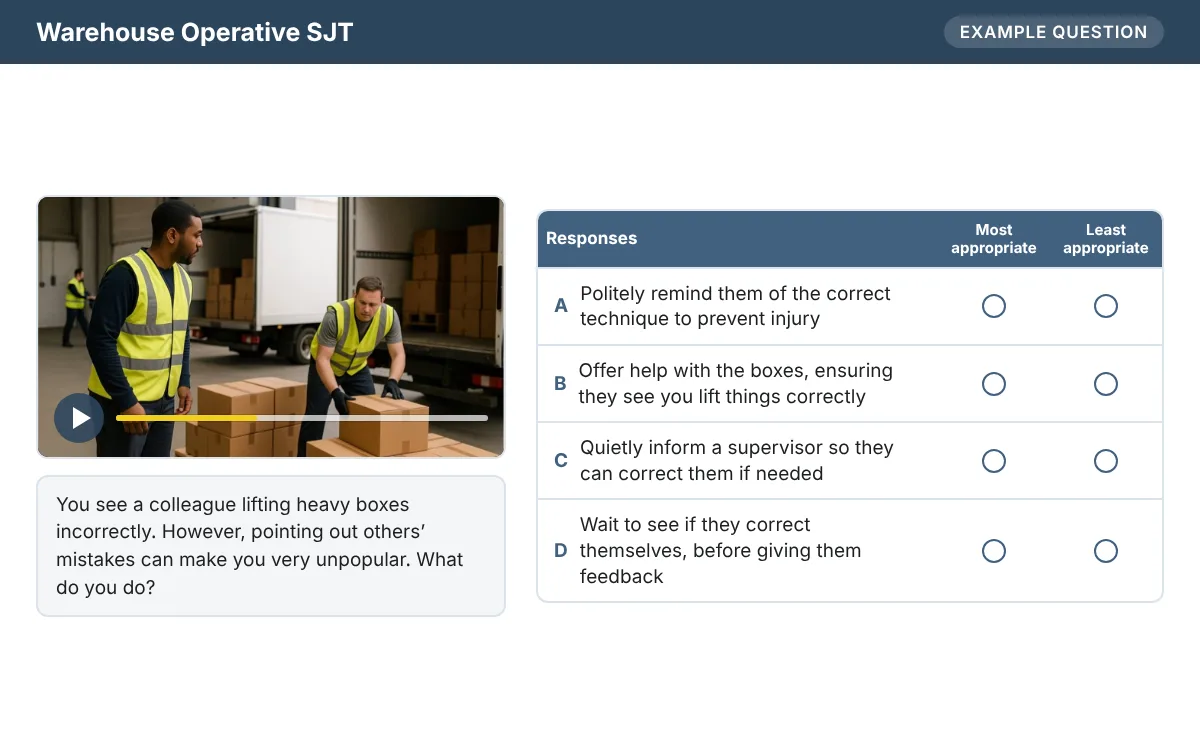
Warehouse Operative SJT
Choose the most and least appropriate responses to realistic warehouse situations. Untimed, about 15 minutes.

